Custom home building is often framed as a blank canvas: total design freedom, tailored layouts, and a home shaped entirely around the buyer. What’s discussed less, and matters more once contracts are signed, is certainty. Certainty around price, process, timelines, and decision-making is what ultimately determines whether a custom build feels empowering or overwhelming.
Looking across three Melbourne custom builders, Singh Homes, Omnia, and Ridgewater Homes, a clearer picture emerges. In practice, all established custom builders must manage cost control, design resolution and construction delivery.
Here's how these custom builders approach these certainties in practice.
Singh Homes
Price certainty, delivered through fixed-price quoting
For many buyers, particularly first-time custom builders or those working within tighter budgets, certainty often starts with price.
One way Singh Homes approaches this is through fixed-price quoting that includes site costs, aiming to reduce the likelihood of budget blowouts later in the build. This provides early clarity around total build costs and appeals to buyers who want fewer financial variables once construction begins.
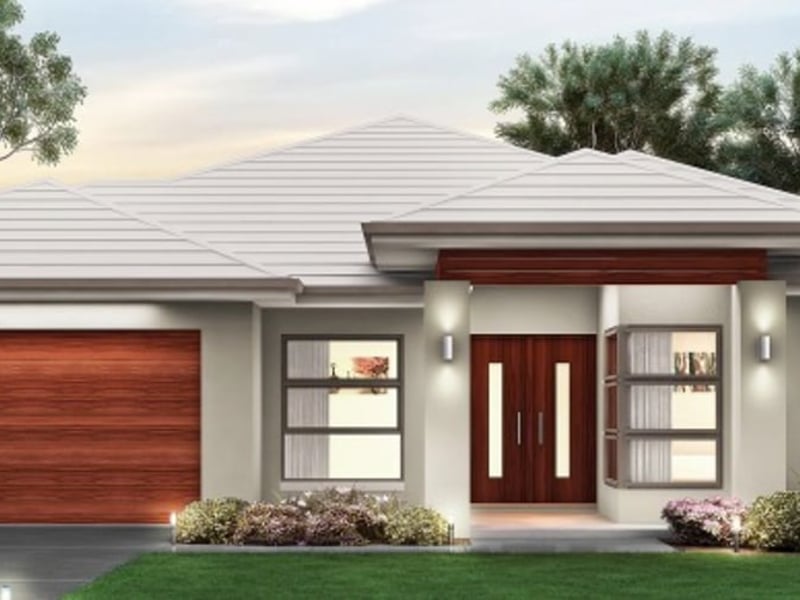
Stoke Grand 28 - Plato by Singh Homes
One consideration with this approach is timing. Greater price certainty often requires earlier design and specification decisions, which can reduce how much flexibility remains later in the process. For buyers still refining their brief, that early commitment may feel restrictive; for others, it offers peace of mind and stronger financial control from the outset.
In practical terms, this approach tends to suit buyers who already have a clear idea of what they want and value predictability throughout the build journey.
Omnia Homes
Process certainty through structure and documentation
For buyers undertaking more complex or higher-end custom builds, uncertainty often shows up not only in pricing, but in timelines, approvals, and communication.
Omnia’s approach to process certainty is delivered through a highly structured framework, including detailed documentation, transparent quoting, guaranteed site start and completion dates, and independent quality inspections at key stages. Here, certainty comes from how the build is managed, ensuring decisions, changes, and milestones are clearly defined and communicated.
This approach appeals to buyers who are comfortable making decisions over time but want confidence that those decisions are being managed within a disciplined and documented process. The focus is on minimising surprises, not by removing flexibility, but by clearly setting expectations around how changes are handled.
For buyers who value professionalism, contract clarity, and procedural accountability, this form of certainty can be just as important as design flexibility.
Ridgewater Homes
Design certainty through early brief clarity
Another common source of frustration in custom builds is not cost or timelines, but misalignment between how buyers think they’ll live and what they ultimately build.
Ridgewater Homes approaches design certainty through deep early-stage engagement, placing emphasis on understanding lifestyle needs, priorities, and personal values before construction begins. By spending more time shaping the design around how clients live, rather than adapting a pre-existing framework, the aim is to reduce changes driven by regret or reassessment later in the build.
This approach can suit buyers who want to be closely involved and are comfortable investing time early to refine their brief. One consideration is decision fatigue: greater involvement upfront can feel demanding, particularly for buyers expecting the builder to take the lead.
For those who value emotional confidence, knowing the home genuinely reflects how they want to live, this form of certainty can be as important as contractual or financial safeguards.
What this means for you
Across all custom builds, certainty around cost, design and delivery is essential. What varies is how that certainty is delivered in practice, through pricing structures, documentation, design collaboration and communication.
Looking at different builders through this lens can help you move beyond surface-level claims of “customisation” and better understand what sits behind them. The more clearly a builder can explain how they manage pricing, decision-making and delivery, the easier it becomes for buyers to assess whether that approach aligns with their expectations and level of involvement.
In custom home building, freedom is appealing. But for most buyers, it’s certainty, in whatever form they value most, that ultimately determines whether the journey feels successful.
Publisher Website: www.homeshelf.com.au