Multi-generational living is no longer a niche housing choice. Rising land costs, longer life expectancy, and adult children staying home for longer are pushing buyers to rethink how a single home can accommodate multiple stages of life at once. What’s changing is not just who lives together, but how homes are being planned to make that arrangement workable over time.
Rather than upsizing indiscriminately, buyers are now scrutinising floor plans for how well they manage independence, privacy, and adaptability under one roof. The most effective multi-generational homes are rarely the biggest; they are the ones designed with clear spatial logic and long-term flexibility built in from the start.
Zoning that supports independence, not just proximity
The defining feature of a successful multi-generational floor plan is zoning. This goes beyond simply placing extra bedrooms at one end of the house. Well-considered layouts create distinct living zones that allow different generations to operate on separate schedules without constant overlap.
Common approaches include a master suite positioned away from secondary bedrooms, a ground-floor bedroom with its own bathroom, or a semi-self-contained wing that can function independently if needed. These zones work best when paired with thoughtful circulation, separate hall access, minimal through-traffic, and doors that allow areas to be closed off when privacy matters.
Buyers should look closely at how noise travels through a plan, how bedrooms relate to shared living areas, and whether one generation is forced to pass through another’s space to move around the home.
Ground-floor living that anticipates future needs
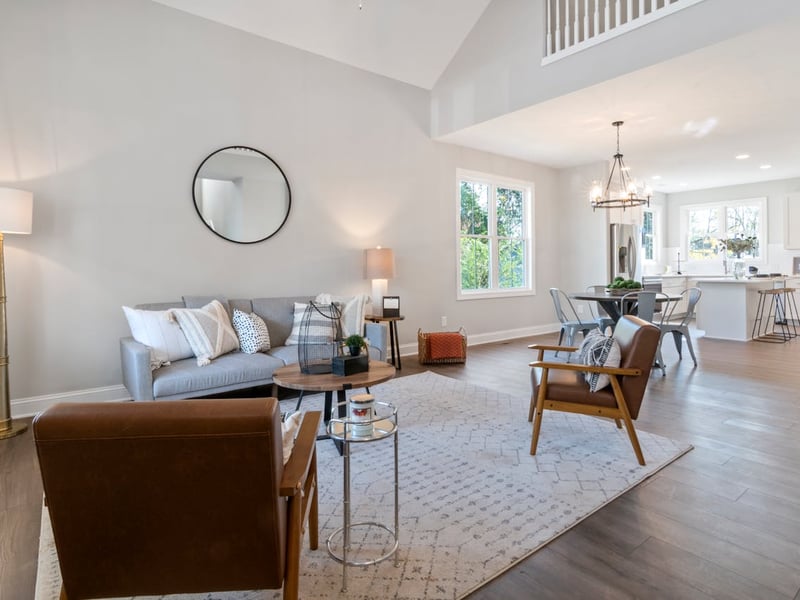
Single-level living within a double-storey home has become a quiet priority for buyers planning ahead. Even when all occupants are currently mobile, incorporating a ground-floor bedroom, bathroom, and easy access to living areas creates long-term resilience.
These spaces are often designed for parents today, but they also future-proof the home for injury recovery, aging in place, or even a home office conversion later. Importantly, the bathroom design matters as much as the bedroom, step-free showers, wider doorways, and circulation space can be integrated subtly without making the home feel clinical.
The goal is optionality. Buyers benefit most when these features are usable immediately but unobtrusive until they are needed.
Secondary living areas that reduce daily friction
Multiple living spaces are not a luxury in multi-generational homes; they are a pressure valve. A single family room forces constant negotiation over noise, routines, and use. A second living area, whether a retreat, rumpus, or lounge, allows different age groups to coexist without competing for space.
The most effective secondary living areas are positioned close to the bedrooms they serve, rather than stacked centrally. For example, an upstairs retreat connected to children’s bedrooms or a sitting room adjacent to a parent’s suite can function as a semi-private domain rather than overflow space.
Buyers should be cautious of floor plans that technically include multiple living areas but place them too close together to offer real separation.
Flexible rooms that change function over time
Multi-generational households are rarely static. Adult children move out, parents’ needs evolve, and work-from-home arrangements shift. Floor plans that rely heavily on fixed-purpose rooms often struggle to adapt.
Flexible rooms, such as studies large enough to become bedrooms, living areas that can be enclosed, or guest rooms positioned near bathrooms, allow the home to evolve without structural changes. Buyers should assess whether rooms have appropriate proportions, storage, and access to daylight to support different uses over time.
The value lies not in labelling rooms, but in ensuring they can be re-labelled without compromise.
Kitchens and laundries designed for shared use
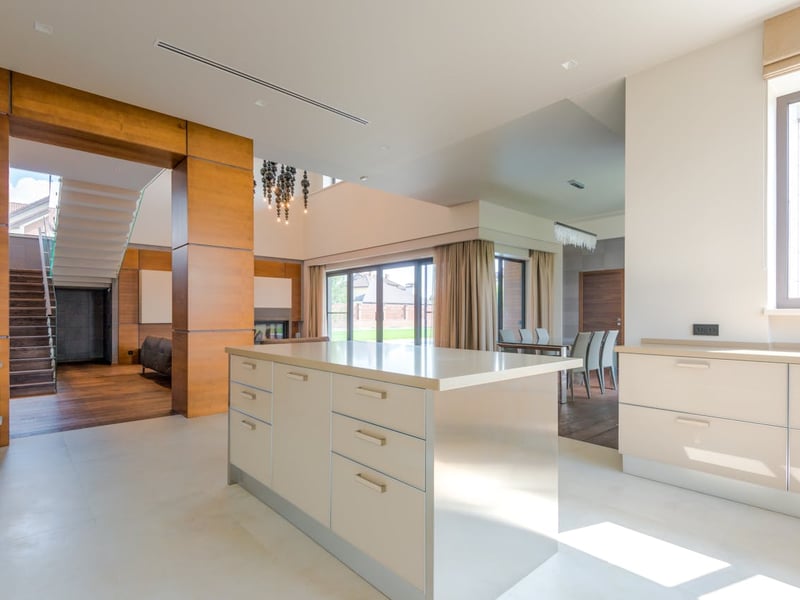
High-traffic spaces carry more weight in multi-generational homes. Kitchens in particular need to accommodate multiple users simultaneously, often with different cooking habits and schedules. Layouts that allow more than one work zone, generous bench space, and clear separation between prep, cooking, and clean-up areas reduce daily friction.
Similarly, laundries benefit from extra storage, bench space, and direct access to outdoor drying areas. These are practical considerations that are often overlooked in favour of living and bedroom counts, yet they have an outsized impact on how well a household functions.
Separate entries and outdoor access where possible
Where budgets and sites allow, separate or semi-separate entries can dramatically improve autonomy. This might be a side entry to a ground-floor suite, direct garage access to a bedroom wing, or private outdoor space linked to one living zone.
These features support independence without formal subdivision, allowing occupants to come and go without disturbing others. For buyers considering long-term co-habitation, this level of separation can make the difference between a workable arrangement and one that feels temporary.
Planning beyond today’s household
The strongest multi-generational floor plans are not designed around current occupants alone. They assume change and allow for it. Buyers should assess whether a home could revert to a conventional family layout in the future, or adapt again if circumstances shift.
Designing for multi-generational living is ultimately about choice, creating a home that supports togetherness without forcing it. Floor plans that respect privacy, anticipate future needs, and prioritise flexibility tend to hold their value not just emotionally, but functionally, over time.
Publisher Website: www.homeshelf.com.au